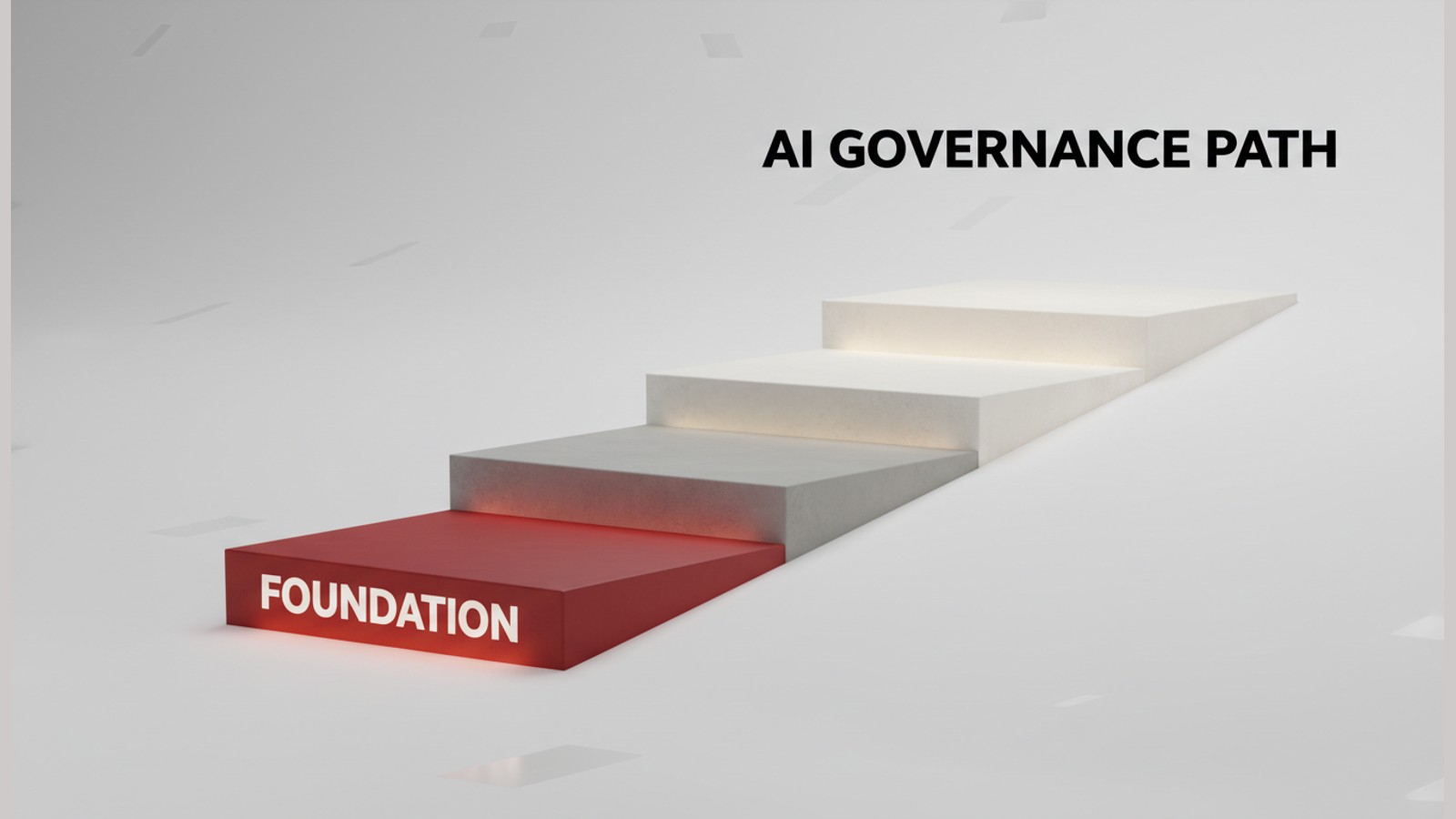
Most Indian universities recognize they need AI governance. Few know where to begin. The risk is not doing nothing. It is doing everything at once: drafting fifty-page policy documents, convening endless committees, and exhausting goodwill before a single student or faculty member sees practical guidance.
Virginia Tech's phased implementation offers a tested alternative. Their sequence, Foundation, Expansion, Maturation, respects institutional reality. Resources are finite. Attention is scarce. Progress requires visible wins before appetite fades.
This article translates that model for Indian and emerging market universities. It shows what must happen in each phase versus what can wait. It maps milestones to typical planning cycles. And it identifies where external partnership accelerates progress without displacing institutional ownership.
Phase 1: Foundation (Months 1 to 6)
Phase 1 is not about completeness. It is about credibility. The goal is to demonstrate that governance can be operational, not theoretical, before skepticism hardens.
The Three Non-Negotiables
Three elements must be in place before Phase 1 closes. Everything else is optional.
AI Charter. A single-page document signed by the Vice-Chancellor or Provost. It states: AI use is permitted within defined boundaries; certain applications require review; violations carry consequences; and a review date is set. This is not a policy manual. It is a declaration of intent that buys time for detailed work.
Risk Assessment Framework. A simple rubric classifying AI applications by data sensitivity, decision consequence, and reversibility. Teaching tools using public data score low. Research tools processing student health records score high. This framework prevents the common trap of treating all AI use as equally risky, which paralyzes decision-making.
Initial Training. Mandatory ninety-minute sessions for three groups: senior leadership, IT security, and procurement. Not faculty-wide rollout. Not student orientation. These three groups make or block decisions. Equipping them early prevents later obstruction.
What Can Wait: Comprehensive policy suites, faculty senate ratification, enterprise licensing negotiations, and cross-institutional benchmarking. These consume months and deliver no operational capability. Defer them to Phase 2 when you have evidence that governance works.
Budget Alignment
Phase 1 maps to the typical Indian university annual planning cycle. Most institutions finalize budgets in March for April start. A Vice-Chancellor directive in January, charter signing by March, and training rollout by June fits naturally. The cost is modest: external facilitator fees for risk framework development and training design, plus internal staff time.
Phase 2: Expansion (Months 7 to 18)
Phase 2 begins only when unit-level self-audits show readiness. This trigger is deliberate. Premature expansion spreads resources thin and produces hollow compliance. Waiting for genuine readiness builds momentum.
The Trigger Condition
Units, departments, or colleges complete a standardized self-audit. It asks: Do you currently use AI tools? For what purposes? What data is involved? Who decided? The audit is not punitive. It is diagnostic. Units scoring "ready" on data inventory, purpose clarity, and decision documentation proceed to domain-specific guidance. Units scoring "developing" receive targeted support and re-audit in six months.
Domain-Specific Guides
Three domains require distinct treatment:
- Teaching. Guidance on AI detection tools, assignment redesign, and academic integrity statements. Focus on what instructors can do this semester, not theoretical best practices.
- Research. Protocols for AI-assisted literature review, data analysis, and manuscript preparation. Distinguish between disclosure requirements for different publication venues.
- Administration. Rules for AI in admissions screening, student services chatbots, and facilities management. Emphasize human-in-the-loop requirements for consequential decisions.
Each guide is ten to fifteen pages, not fifty. Each includes decision trees, not abstract principles. Each is owned by a designated faculty coordinator, not centralized compliance.
Research Context: A 2025 global Delphi study found that higher education institutions worldwide struggle with governance fragmentation: policies developed in isolation from operational practice, creating "implementation gaps" that undermine trust (International Journal of Educational Technology in Higher Education). Phase 2's unit-triggered approach directly addresses this by grounding guidance in actual usage patterns.
Budget Alignment
Phase 2 spans two planning cycles. Year one covers audit design, pilot units, and first guide development. Year two funds broader rollout and refinement. This pacing respects that Indian universities rarely secure multi-year commitments upfront. Each year builds evidence for the next.
Phase 3: Maturation (Month 19 Onward)
Phase 3 is not a destination. It is a transition to sustainable operation. The signal is moving from pilot programs to permanent structures with predictable review cycles.
Structural Markers
Three changes indicate maturation:
Standing AI Governance Committee. Not an ad hoc task force. A committee with defined membership, meeting schedule, and decision authority. It reports to Academic Council or equivalent, not through multiple administrative layers.
Annual Review Cycles. Every guidance document carries a review date. Technology changes. Tools evolve. Without scheduled review, documents become obsolete and ignored.
Integration with Existing Processes. AI review becomes part of standard procurement, research ethics, and curriculum approval workflows. Standalone AI processes wither from neglect. Embedded processes survive.
Success Indicator: When faculty and staff stop asking "What is the AI policy?" and start asking "Does this specific use need review?" governance has matured from abstract to operational.
Budget Alignment
Phase 3 costs stabilize and become predictable. Committee operations, annual review staffing, and training updates fit within standard administrative budgets. The heavy investment of Phases 1 and 2 yields compounding returns: fewer crises, faster decisions, reduced compliance overhead.
Where External Partnership Accelerates Progress
Universities can execute this roadmap independently. External partnership accelerates specific bottlenecks without displacing institutional ownership.
Phase-Gate Readiness Assessments
Objective evaluation of whether Phase 1 foundations are solid enough to support Phase 2 expansion. External review prevents the common error of premature scaling that collapses under operational stress.
Practical Implementation Guide Development
Translation of institutional intent into working documents. Not policy drafting from first principles, but adaptation of tested templates to local context: Indian regulatory environment, UGC expectations, state university act requirements.
Compliance Mapping for WCAG 2.1 AA
AI tools deployed in teaching and administration must meet accessibility standards. Mapping procurement requirements, vendor evaluation criteria, and testing protocols ensures compliance from adoption, not retrofit.
ElevAIte's Perspective: We have supported Indian universities through each phase of this roadmap. The pattern is consistent: institutions that invest six months in genuine Foundation work achieve in eighteen months what others spend three years attempting. Speed comes from sequence discipline, not resource abundance.
Common Failure Modes and How to Avoid Them
Three patterns derail implementation:
Policy-First Syndrome. Drafting comprehensive documents before understanding actual use. The remedy is Phase 1's Charter approach: minimal viable governance that learns from practice.
Perfectionism in Expansion. Delaying Phase 2 until all units are ready. The remedy is the self-audit trigger: move ready units forward, support others without holding everyone hostage to the slowest.
Committee Proliferation. Creating parallel structures instead of embedding AI into existing governance. The remedy is Phase 3's integration requirement: no new committees without sunsetting existing ones.
Starting This Month
The roadmap is not a proposal for future consideration. It is executable now.
This month: convene a two-hour workshop with Vice-Chancellor, Registrar, and IT Director. Present the Virginia Tech phased model. Secure agreement on Phase 1 scope. Assign charter drafting responsibility.
Next month: circulate draft Charter for comment. Limit feedback period to two weeks. Revise and schedule signing.
Month three: deliver initial training to the three priority groups. Collect feedback for Phase 2 guide development.
Six months of disciplined Foundation work creates the platform for everything that follows. The alternative, waiting for perfect conditions, guarantees continued exposure to ungoverned AI adoption.
Sources
- Governing generative AI in higher education: a global Delphi study on policy and practice | International Journal of Educational Technology in Higher Education | Springer Nature Link
- Ethical Readiness for Responsible AI in Higher Education: A Pre-deployment Institutional Governance Framework | Journal of Ethics in Higher Education
- Responsible and Ethical AI Framework for Virginia Tech [v2.0 Sep 2025]
Share this article